
UltraVision XC
In development, not yet available for saleA six-pound point-of-care scanner with a 13-inch, 2880×1920 pixel touch display, built around a high-end Microsoft Surface Pro running Windows 11. All the imaging of the XS in a tablet you can hold in one hand. Electrical safety testing and the regulatory documentation for the XC are in progress.
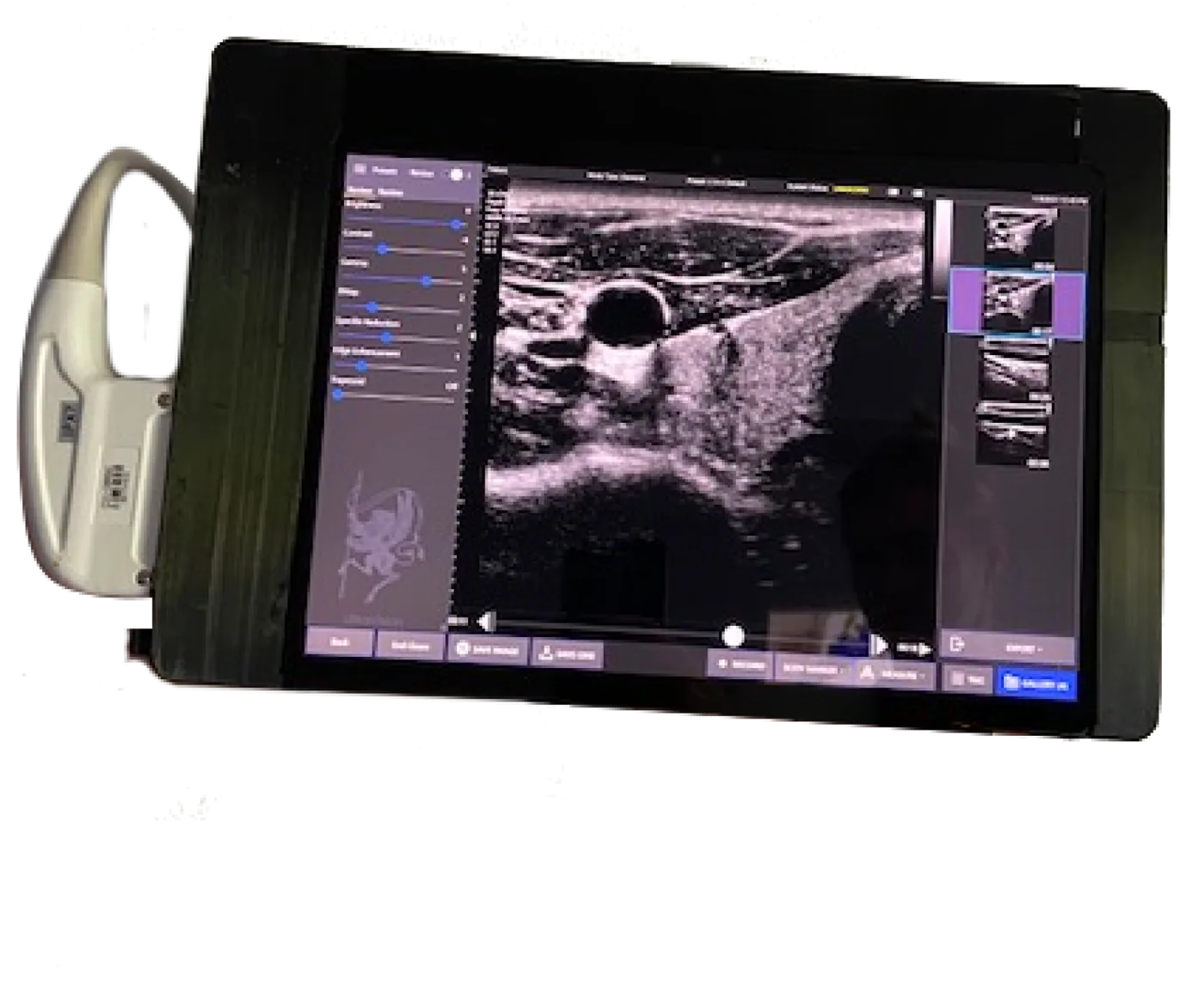
Everything a high-end tablet brings, plus ultrasound
Thunderbolt made it possible to put the scanner on a thin cable to the PC, but tablets lacked the durability a medical device needs until Microsoft put a Thunderbolt interface on the Surface Pro. After it withstood our testing, the XC was born.
- Bluetooth keyboards and mice, Wi-Fi and a multi-touch screen
- Forward-facing camera for facial recognition, securing user and patient data
- The image flips automatically as you change the angle you hold the device, resizing to the space available
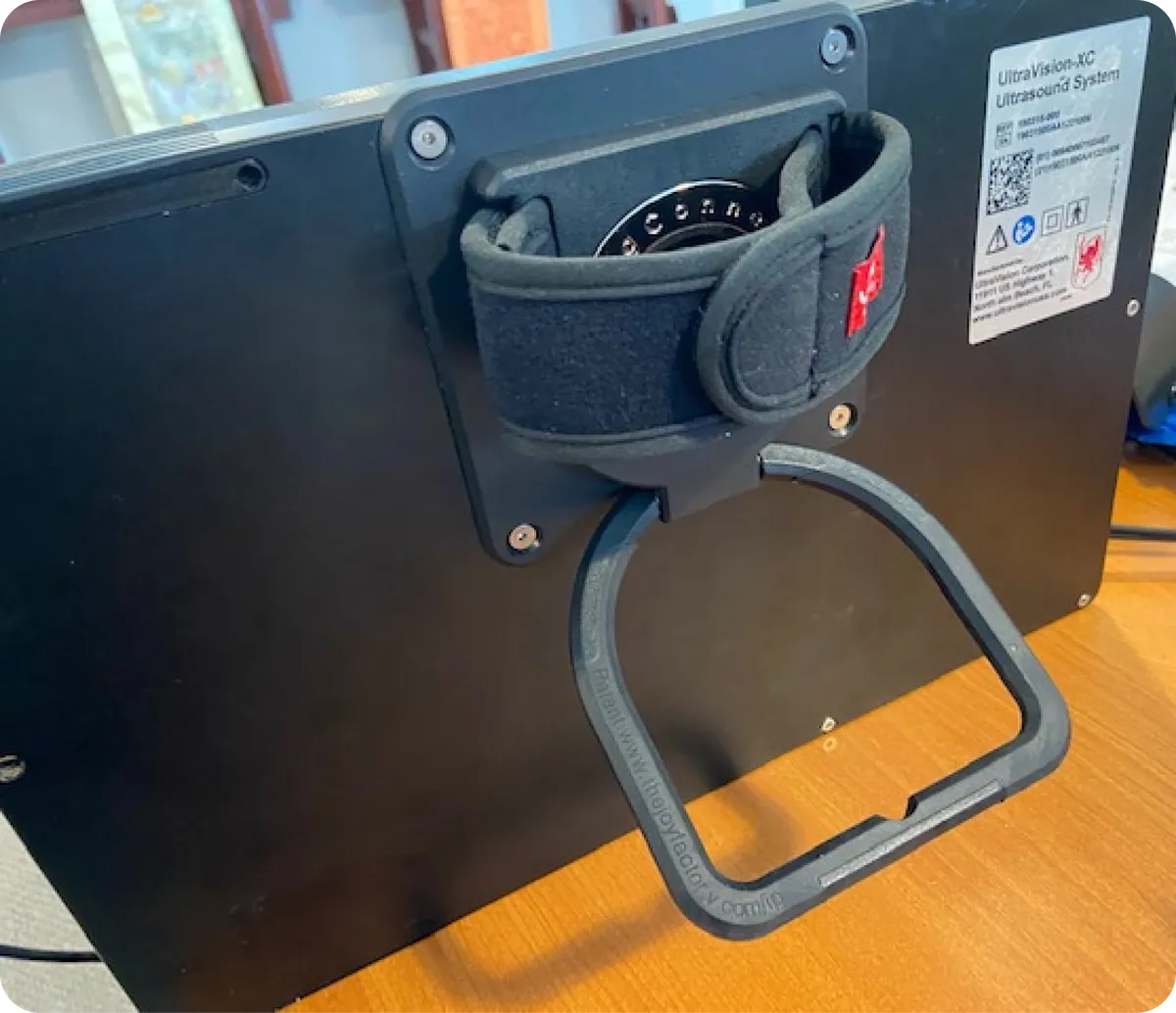
- A rotating hand strap with a desk stand that also attaches the XC to a stand or cart
- Same clinical software, patient database and DICOM output as the XS
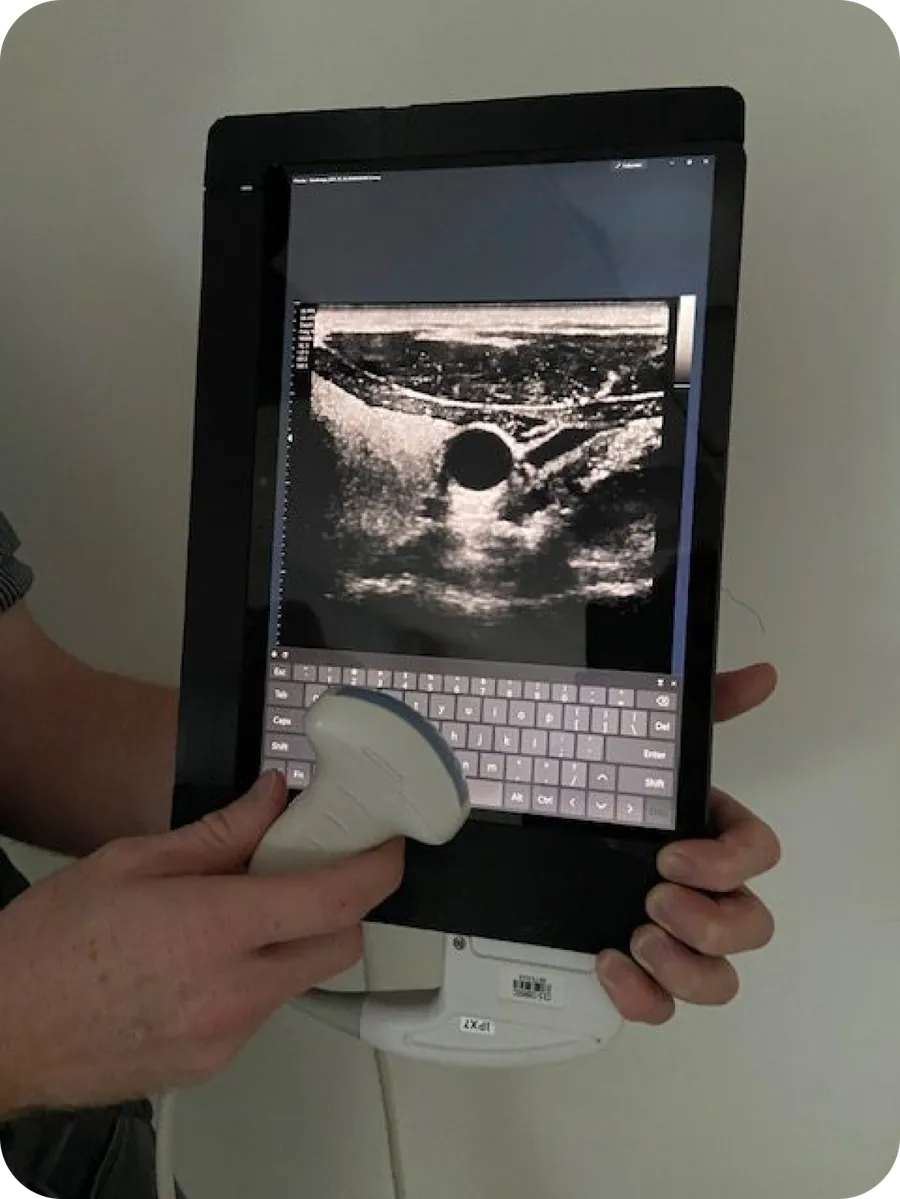
UltraVision XC at a glance
- Display
- 13″ multi-touch, 2880×1920 pixels, auto-rotating image
- Computer
- Microsoft Surface Pro with Intel i7 processor, Windows 11
- Interface
- Thunderbolt 4 between the tablet and the ultrasound electronics
- Weight
- About six pounds complete
- Transducers
- 2 to 20 MHz linear, curved linear and phased arrays
- Modes
- B, M, pulse-wave Doppler, colour flow Doppler, compression elastography, harmonic imaging, photoacoustics. In development: needle visualization
- Connectivity
- Wi-Fi, Bluetooth, USB, forward camera for sign-in
- Mounting
- Rotating hand strap, desk stand, cart and stand attachment
- Applications
- Planned at release: musculoskeletal, vascular, endocrinology. In development: phlebology, needle guidance, breast, abdominal, cardiac
- Availability
- In development. Not yet available for sale pending completion of IEC 60601-1 safety testing and regulatory documentation
- Warranty
- Five years
Specifications are subject to change. Contact us for the current specification sheet and configuration options.
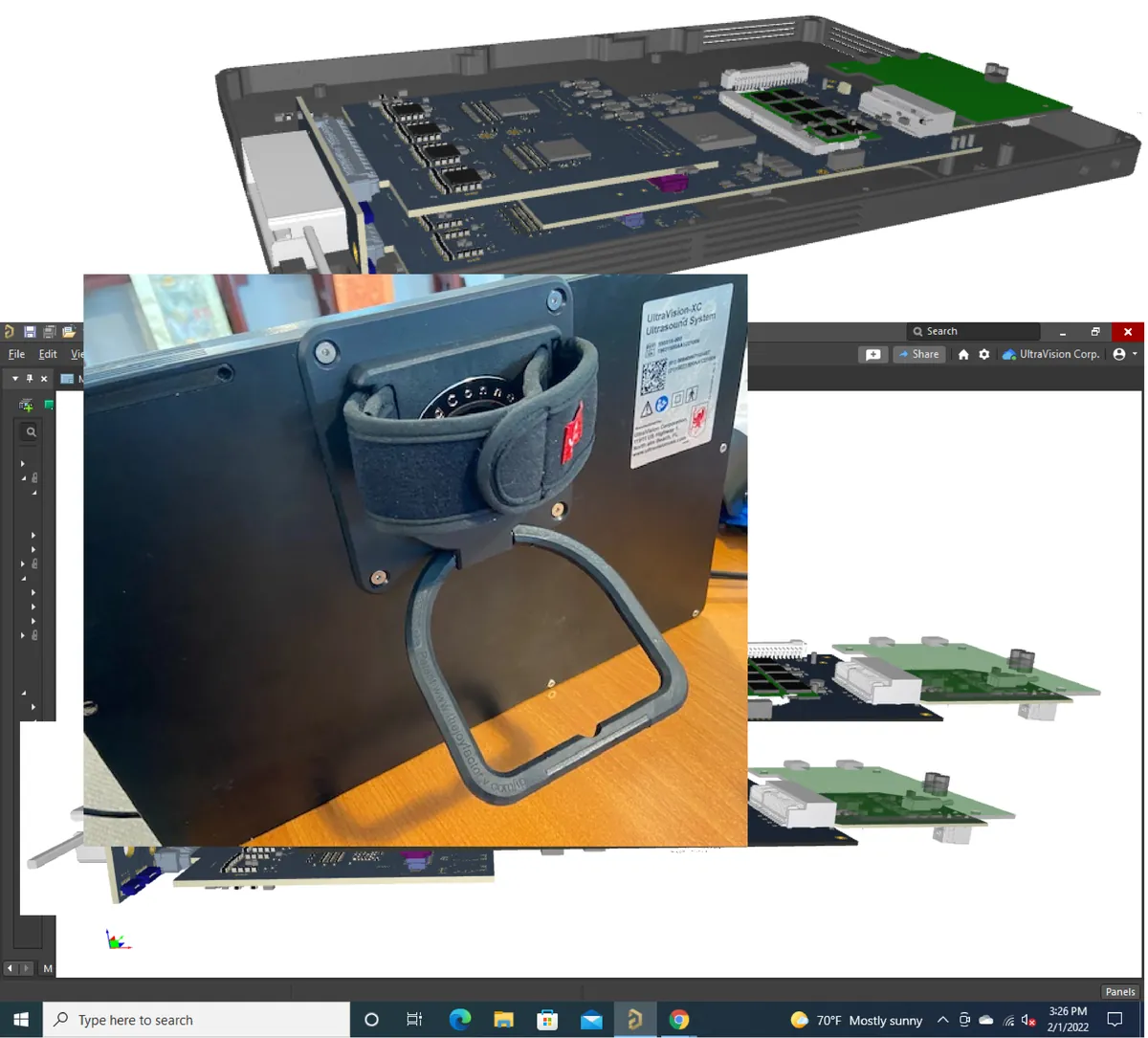
Applications grow with your practice
Because the UltraVision design routes every data path through one large FPGA and a GPU, new applications are software algorithm upgrades. Obstetrics, gynecology and prostate scanning will follow customer demand without replacing the system you bought.
Phlebology practices, for example, will find the XC with the L14-4 linear transducer and simultaneous colour flow well suited to visualizing lower extremity venous anatomy once that application completes clinical development.
See the specialties we supportFollow the UltraVision XC
The XC is in development. Register your interest and we will tell you when it is available, or ask us about partnering to bring the XC to your specialty.